Blog by Victoria Williams, March 2024
Prison Food Procurement: benefitting prisoners and the public purse
Food procurement is the sourcing and purchasing of food, and is a task overseen by the public sector in the UK for prisons, schools, hospitals, and other public sector run organisations. In this blog, which forms part of a series exploring in more depth the contents of our recent ‘Food Matters in Prisons’ briefing, we consider the benefits to the public purse of putting ‘good’ food at the heart of prison food procurement, as well as how better food procurement can reduce crime and recidivism.
When talking about food in prison, the reference point for the majority is what prisoners are fed: the food that is served from the prison kitchen. With good reason too, as this is largely what we read or hear about in the media. How bad or good it is; how much or little choice prisoners have; and perhaps most argued over: the amount of public money that is or isn’t spent on providing three meals a day. When it makes an appearance in the news, the topic of prison food carries polarising headlines, decrying how luxurious or how terrible it is, depending on which side of the prison gates you are on.
Recent headlines include:
‘UK Prisons: Is Food Being Used as a Measure of Control?’
‘Prisoners’ food budgets increase by 54p a day’
‘Britain’s most indulgent prison Christmas lunch boasts seven main course options’
‘Angry prison inmate slams ‘absolute state’ of the food he’s given in UK prison’
‘Lamb shank redemption! Anger as prisoners are allowed to order chops, steak and smoked salmon behind bars… while low-paid workers are forced to use food banks’
We rarely hear or discuss the quality of the food served in prisons, or how taxpayers’ money can be used more productively. Well-procured food within the prison system can contribute to reductions in crime and violence; address poor health outcomes; and reduce food-related carbon emissions and habitat loss as part of the Government’s net zero targets.
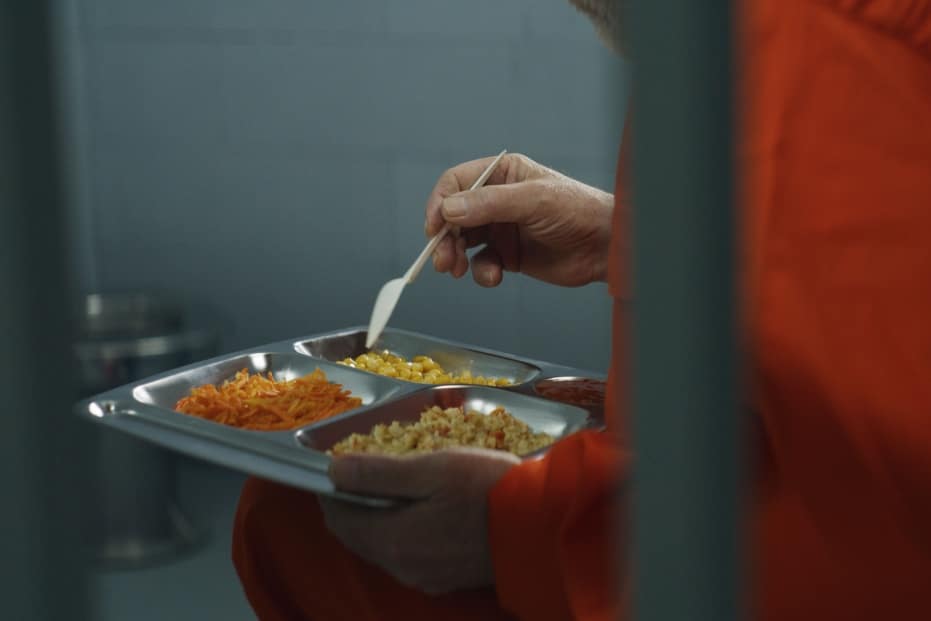
The costs
In 2010, prison services were identified as one of the five main sectors of public expenditure on food and catering. At that time, UK public sector spent over £2.4 billion on procuring food for schools, hospitals, prisons, government agencies, and care homes. In 2016, £54 million was spent by Ministry of Justice (MoJ) on catering services annually through centrally let contracts covering public sector prisons in England and Wales. Privately run prisons determine their own budgets (currently of the 141 prisons in England and Wales, 14 are privately run by 3 companies, Serco, G4S and Sodexo).
In addition to the food procured for the prison kitchen, a substantial amount of public money is spent on delivering the Prison Retail Service (commonly referred to as the ‘canteen’) contract. DHL currently delivers this £375 million 7-year contract to supply prisoners with their weekly ‘canteen’ purchases – selling a range of foods, toiletries and other items.
Our experience of working in prisons over the last 12 years has shown that the canteen largely reflects the product types and proportion of foods available in a typical convenience shop; limited fresh foods, limited healthy items, and vast majority of items identified as being highly processed foods such as biscuits, crisps, chocolate, instant noodles etc.
Why does good food matter?
A balanced diet, with nutrient-rich fresh food is vital for concentration, learning and positive mood, all of which can affect a person’s ability to interact well in society. Conversely, a diet heavy in processed foods, salt, sugar and fat can be a contributory factor to a person’s underachievement, anti-social behaviour and subsequent offending. Moreover, 35% of greenhouse gas emissions globally come from the food system. Focussing on buying sustainable and healthy food provides an opportunity to improve prisoner diets whilst reducing the UK’s food-related carbon footprint at the same time. Procurement happens on a huge scale, meaning this is an area with real potential for positive impact.
In 2014, DEFRA acknowledged that food procured by Government significantly affects the health, wellbeing, and habits of the consumers of that food across the public sector, including prisons. Public food procurement impacts almost 24% of the population in England alone, and given this is largely catering for hospitals, schools, care homes and prisons we can assume a significant proportion of that 24% are people facing forms of marginalisation.
Where prison food comes from
Currently DEFRA estimates that 50% of food procured for public prisons is grown in the UK. Comparatively, domestic production is around 75% of the total value of the food eaten in the UK. DEFRA data also shows the very limited extent to which prisons were using any food standards such as Red Tractor, seasonal, organic, or fairly-traded products – despite the fact that the Government Buying Standards, which set regulations for publicly-procured food, stipulate minimum standards covering these and other food requirements.
Just 25 years ago, it was a very different situation. HM Prison Farms & Gardens was the third largest farming operation in England & Wales with over 2,000 prisoners employed annually, generating a profit of over £3 million and feeding up to 47,000 inmates three times a day.
Pressure on public spending
Given the impact publicly procured food has on health, mental wellbeing, climate emissions, and the economy, what needs to happen to make the prison food pound work harder for public good?
In our report we give a range of recommendations and point to existing opportunities in prison food procurement where improvements can be made to support better food provision, better health and rehabilitation outcomes, and where higher food standards can boost the British food and farming economy. These opportunities include greater flexibility around sourcing local and seasonal produce in future food contracts; improving the understanding of people in prison about the importance of food choices; and increased transparency and scrutiny through better monitoring of food standards through the Prison Inspectorates.
If the procurement of food for prisons is viewed merely in terms of the cost of providing three meals a day, it will always be regarded as a drain on the public purse. But if we view healthy food procurement as an investment rather than an expenditure, we see how it has long-lasting future benefits such as making prisons safer, improving health and rehabilitation outcomes, the British farming economy, and food related climate mitigation.
Contact [email protected] about our Food and Criminal Justice work
Blog by Victoria Williams, March 2024
Prison Food Procurement: benefitting prisoners and the public purse
Food procurement is the sourcing and purchasing of food, and is a task overseen by the public sector in the UK for prisons, schools, hospitals, and other public sector run organisations. In this blog, which forms part of a series exploring in more depth the contents of our recent ‘Food Matters in Prisons’ briefing, we consider the benefits to the public purse of putting ‘good’ food at the heart of prison food procurement, as well as how better food procurement can reduce crime and recidivism.
When talking about food in prison, the reference point for the majority is what prisoners are fed: the food that is served from the prison kitchen. With good reason too, as this is largely what we read or hear about in the media. How bad or good it is; how much or little choice prisoners have; and perhaps most argued over: the amount of public money that is or isn’t spent on providing three meals a day. When it makes an appearance in the news, the topic of prison food carries polarising headlines, decrying how luxurious or how terrible it is, depending on which side of the prison gates you are on.
Recent headlines include:
‘UK Prisons: Is Food Being Used as a Measure of Control?’
‘Prisoners’ food budgets increase by 54p a day’
‘Britain’s most indulgent prison Christmas lunch boasts seven main course options’
‘Angry prison inmate slams ‘absolute state’ of the food he’s given in UK prison’
‘Lamb shank redemption! Anger as prisoners are allowed to order chops, steak and smoked salmon behind bars… while low-paid workers are forced to use food banks’
We rarely hear or discuss the quality of the food served in prisons, or how taxpayers’ money can be used more productively. Well-procured food within the prison system can contribute to reductions in crime and violence; address poor health outcomes; and reduce food-related carbon emissions and habitat loss as part of the Government’s net zero targets.
The costs
In 2010, prison services were identified as one of the five main sectors of public expenditure on food and catering. At that time, UK public sector spent over £2.4 billion on procuring food for schools, hospitals, prisons, government agencies, and care homes. In 2016, the amount £54 million was spent by Ministry of Justice (MoJ) on catering services annually on food through centrally let contracts covering public sector prisons in England and Wales was £54 million, and since 2012 the total spend on prison food has reduced from £60 million. Privately run prisons determine their own budgets (currently of the 141 prisons in England and Wales, 14 are privately run by 3 companies, Serco, G4S and Sodexo).
In addition to the food procured for the prison kitchen, a substantial amount of public money is spent on delivering the Prison Retail Service (commonly referred to as the ‘canteen’) contract. DHL currently delivers this £375 million 7-year contract to supply prisoners with their weekly ‘canteen’ purchases – selling a range of foods, toiletries and other items.
Our experience of working in prisons over the last 8 years has shown that the canteen largely reflects the product types and proportion of foods available in a typical convenience shop; limited fresh foods, limited healthy items, and vast majority of items identified as being highly processed foods such as biscuits, crisps, chocolate, instant noodles etc.
Why does good food matter?
A balanced diet, with nutrient-rich fresh food is vital for concentration, learning and positive mood, all of which can affect a person’s ability to interact well in society. Conversely, a diet heavy in processed foods, salt, sugar and fat can be a contributory factor to a person’s underachievement, anti-social behaviour and subsequent offending. Moreover, 35% of greenhouse gas emissions globally come from the food system. Focussing on buying sustainable and healthy food provides an opportunity to improve prisoner diets whilst reducing the UK’s food-related carbon footprint at the same time. Procurement happens on a huge scale, meaning this is an area with real potential for positive impact.
In 2014, DEFRA acknowledged that food procured by Government significantly affects the health, wellbeing, and habits of the consumers of that food across the public sector, including prisons. Public food procurement impacts almost 24% of the population in England alone, and given this is largely catering for hospitals, schools, care homes and prisons we can assume a significant proportion of that 24% are people facing forms of marginalisation.
Where prison food comes from
Currently DEFRA estimates that 50% of food procured for public prisons is grown in the UK. Comparatively, domestic production is around 75% of the total value of the food eaten in the UK. DEFRA data also shows the very limited extent to which prisons were using any food standards such as Red Tractor, seasonal, organic, or fairly-traded products – despite the fact that the Government Buying Standards, which set regulations for publicly-procured food, stipulate minimum standards covering these and other food requirements.
Just 25 years ago, it was a very different situation. HM Prison Farms & Gardens was the third largest farming operation in England & Wales with over 2,000 prisoners employed annually, generating a profit of over £3 million and feeding up to 47,000 inmates three times a day.1
Pressure on public spending
Given the impact publicly procured food has on health, mental wellbeing, climate emissions, and the economy, what needs to happen to make the prison food pound work harder for public good?
In our report we give a range of recommendations and point to existing opportunities in prison food procurement where improvements can be made to support better food provision, better health and rehabilitation outcomes and higher food standards can be achieved supporting the British food and farming economy. These opportunities include the inclusion of greater flexibility around sourcing local and seasonal produce in future food contracts; improving the understanding of people in prison about the importance of food choices; and increased transparency and scrutiny through better monitoring of food standards through the Prison Inspectorates.
If the procurement of food for prisons is viewed merely in terms of the cost of providing three meals a day, it will always be regarded as a drain on the public purse. But if we view healthy food procurement as an investment rather than an expenditure, we see how it has long-lasting future benefits such as making prisons safer, improving health and rehabilitation outcomes, the British farming economy, and food related climate mitigation.
Given the substantial amount of public money spent on public sector catering including prisons, taking a more joined up approach to food procurement would provide the opportunity for the government to use tax-payer money to support British farmers, reduce carbon emissions and improve prisoner outcomes.
Contact [email protected] about our Food and Criminal Justice work