A 2024 study reiterated that the majority of young people struggle to meet the recommended 5-a-day target for fruit and vegetable consumption. Figures are low, but unsurpising. Biteback recently found that 7 out of 10 products that were unhealthy (nutrient poor and heavily processed) from the top ten food providers were deliberately packaged to appeal to children and young people.
The problem is twofold: big food companies dominate advertising, pushing junk food with tremendous force through every available channel. The money, and capacity, invested into health and wellbeing messaging often can’t compete, and struggles to cut through. When it does, it doesn’t necessarily appeal to young people, or feel relevant to their lives.
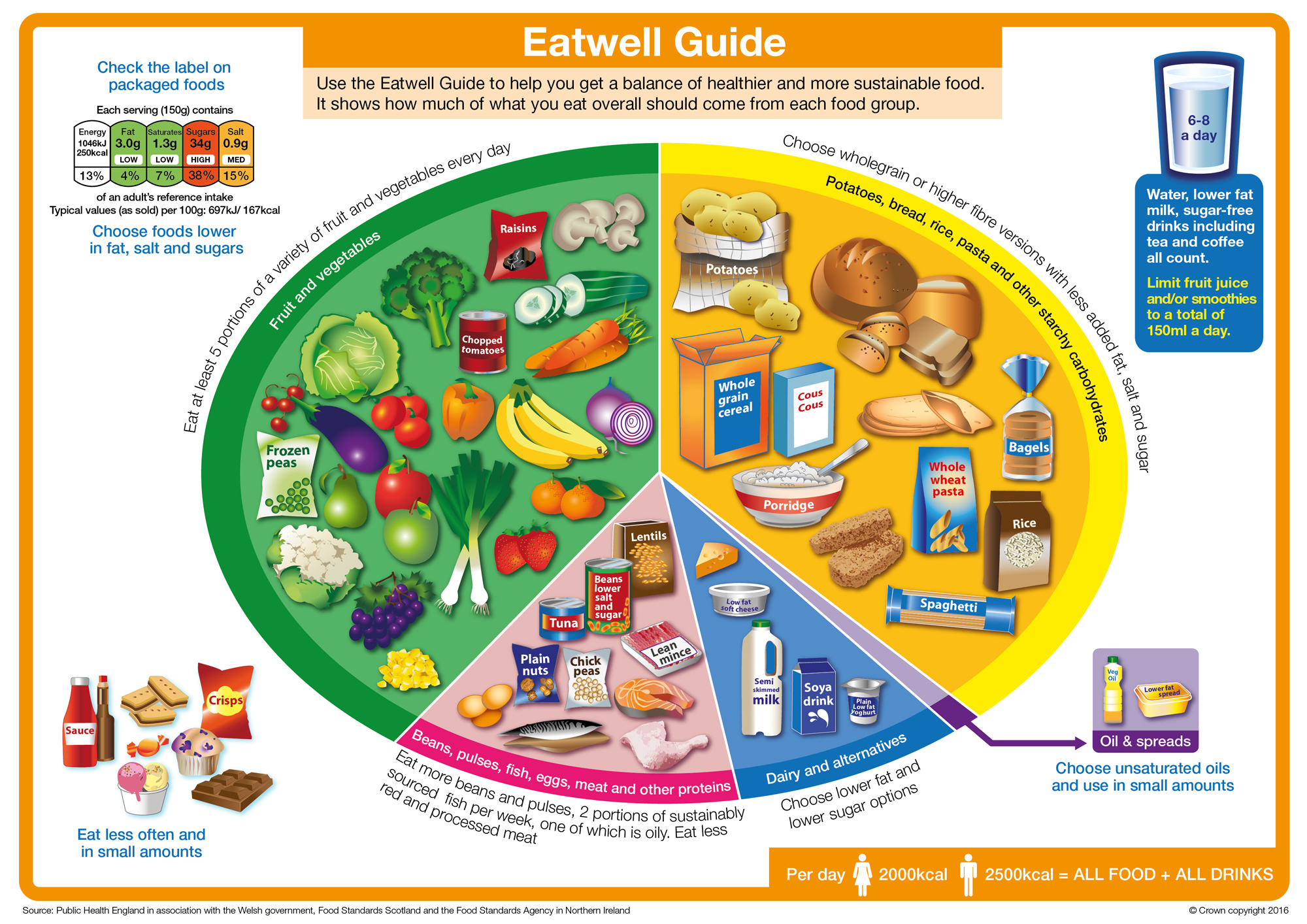
Take the Eat Well guide below, issued by the government, giving guidelines for what a balanced plate can and should look like. By all means a helpful tool, but not one that necessarily feels visually appealing to young people. Moreover, messaging around health and wellness online is often attached to the glossy, sanitised, and expensive aesthetic of the wellness industry. This is an industry that feels alienating to many – never mind young people, who are often in wildly different circumstances financially, emotionally, culturally, and geographically to those who tout health ideals online.
This is the backdrop for Food Hits Different started – an action-based research project we are running, designed to rethink how healthy food is communicated to young people, particularly those facing challenging circumstances such as low income, homelessness, or poor housing. Through a mix of focus groups and practical nutrition sessions tailored around participants’ learning goals, we aim to better understand the relationship young people have to health and wellness messaging, and use this information to co-create messaging that is practical and feels relevant to their lives.
We recently ran a 6 week long group with 8 young people from across East Sussex from various backgrounds. In these sessions, participants co-designed and created content that reflects their needs and perspectives around food + health. Alongside practical cooking, nutrition, and habit-building skills, participants co-created content that reflects their realities. Working with a local videographer, they developed media skills and produced content to influence how healthy eating is promoted locally and nationally.
What we Learned:
Health:
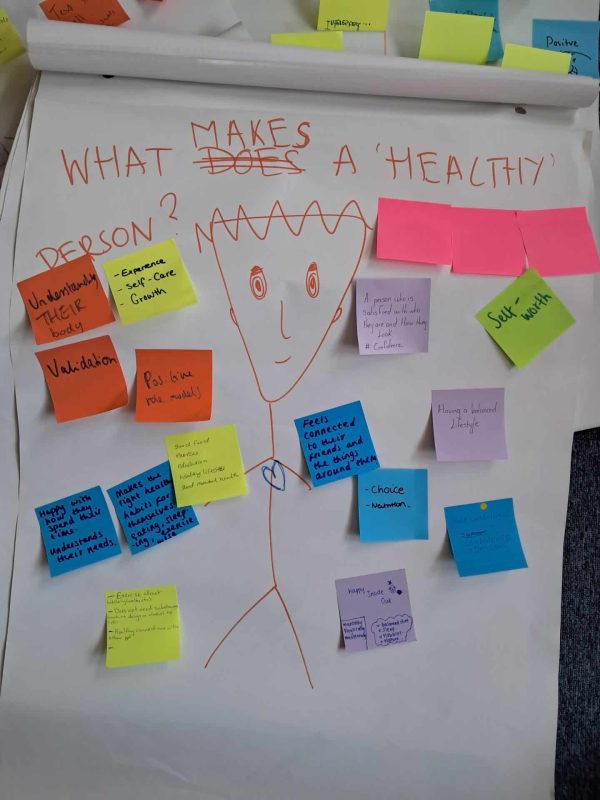
The Oxford English Dictionary defines health as “the condition of the body and the degree to which it is free from illness.” Unsurprisingly, this felt far too narrow. Participants highlighted connection + community, self-care, choice, confidence, and happiness—inside and out—as central to their understanding of health. Many commented that external societal factors are as important to health as our physical body. Together we developed a broader definition, taking inspiration from the World Health Organisation definition and The Fat Doctor:
“Health is the dynamic balance of physical, mental, social, and existential well-being in adapting to conditions of life and the environment. It is a journey, not a destination, and should belong to everyone.”
Messaging:
We looked at a range of already existing messaging around health and wellbeing to understand what people were drawn to, and what they disliked.
Credibility and practicality mattered most. Young people wanted advice that translated into their everyday lives, with simple, actionable steps – particularly important for those who felt like they had limited control over their food choices due to their home situations, or had been left out of decision making around food. They also noted gaps in representation—like the lack of gender-expansive gym content, or culturally relevant food —that would make health messaging feel more inclusive. Video content was a resounding favourite for people.
Content:
We had the opportunity to work with a local videographer, and brainstormed what people would like to see.
Some ideas that people shared were:
- A shopping list that has some of the key ingredients you need in your store cupboard to make basic and healthy food
A guide on eating healthy whilst out-and-about in Brighton (where we held these sessions) - A guide to making healthy desserts
- Creating some healthy, easy meals on a budget
Our end result was our ‘Cooking Matters: Food Hits Different video, below, which is also broken up into reels for disseminating on social media.
What’s Next
We’re taking Food Hits Different to more communities across East Sussex, hearing more insights and co-creating content to shape healthier, more relevant food messaging.
Drop us an email at [email protected] if you’d like to be involved.
A recent nutrition survey found that only 9 % of 11–18-year-olds nationally meet the five-a-day fruit and vegetable target. This is incredibly low, but hardly surprising. Biteback recently found that 7 out of 10 products that were unhealthy (nutrient poor and heavily processed) from the top ten food providers were deliberately packaged to appeal to children and young people.
The problem is twofold: big food companies dominate advertising, pushing junk food with tremendous force through every available channel. The money, and capacity, invested into health and wellbeing messaging often can’t compete, and struggles to cut through. When it does, it doesn’t necessarily appeal to young people, or feel relevant to their lives.
Take the Eat Well guide below, issued by the government, giving guidelines for what a balanced plate can and should look like. By all means a helpful tool, but not one that necessarily feels visually appealing to young people. Moreover, messaging around health and wellness online is often attached to the glossy, sanitised, and expensive aesthetic of the wellness industry. This is an industry that feels alienating to many – never mind young people, who are often in wildly different circumstances financially, emotionally, culturally, and geographically to those who tout health ideals online.
This is the backdrop for Food Hits Different started – an action-based research project we are running, designed to rethink how healthy food is communicated to young people, particularly those facing challenging circumstances such as low income, homelessness, or poor housing. Through a mix of focus groups and practical nutrition sessions tailored around participants’ learning goals, we aim to better understand the relationship young people have to health and wellness messaging, and use this information to co-create messaging that is practical and feels relevant to their lives.
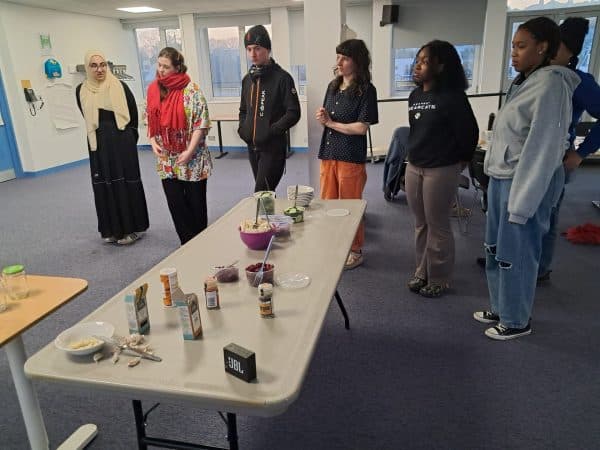
We recently ran a 6 week long group with 8 young people from across East Sussex from various backgrounds. In these sessions, participants co-designed and created content that reflects their needs and perspectives around food + health. Alongside practical cooking, nutrition, and habit-building skills, participants co-created content that reflects their realities. Working with a local videographer, they developed media skills and produced content to influence how healthy eating is promoted locally and nationally.
What we Learned:
Health:
The Oxford English Dictionary defines health as “the condition of the body and the degree to which it is free from illness.” Unsurprisingly, this felt far too narrow. Participants highlighted connection + community, self-care, choice, confidence, and happiness—inside and out—as central to their understanding of health. Many commented that external societal factors are as important to health as our physical body. Together we developed a broader definition, taking inspiration from the World Health Organisation definition and The Fat Doctor:
“Health is the dynamic balance of physical, mental, social, and existential well-being in adapting to conditions of life and the environment. It is a journey, not a destination, and should belong to everyone.”
Messaging:
We looked at a range of already existing messaging around health and wellbeing to understand what people were drawn to, and what they disliked.
Credibility and practicality mattered most. Young people wanted advice that translated into their everyday lives, with simple, actionable steps – particularly important for those who felt like they had limited control over their food choices due to their home situations, or had been left out of decision making around food. They also noted gaps in representation—like the lack of gender-expansive gym content, or culturally relevant food —that would make health messaging feel more inclusive. Video content was a resounding favourite for people.
Content:
We had the opportunity to work with a local videographer, and brainstormed what people would like to see.
Some ideas that people shared were:
- A shopping list that has some of the key ingredients you need in your store cupboard to make basic and healthy food
A guide on eating healthy whilst out-and-about in Brighton (where we held these sessions) - -A guide to making healthy desserts
- -Creating some healthy, easy meals on a budget
Our end result was our ‘Cooking Matters: Food Hits Different’ video, below, which is also broken up into reels for disseminating on social media.
What’s Next
We’re taking Food Hits Different to more communities across East Sussex, hearing more insights and co-creating content to shape healthier, more relevant food messaging.
Drop us an email at [email protected] if you’d like to be involved.