Turning Ambition into Action: Why a Scottish Good Food Nation Needs Food Partnerships
Scotland's Good Food Nation act is ambitious, exciting, and – with the right support – potentially a groundbreaking improvement to the way food is produced and consumed. However, achieving this requires more than just government policy; without strong local structures to bring the act together, there is a risk that the lofty ambitions will fail to translate into good food for everyone.
It is no secret that Scotland's food system is not delivering, just 1 in 10 adults eat their five-a-day, a million-face food insecurity and the farming sector contributes 20% of climate emissions. But there is hope, the Scottish Government's Good Food Nation Act aims to make Scotland a place "where people from every walk of life take pride and pleasure in, and benefit from, the food they produce, buy, cook, serve and eat each day." The framework has the potential to accelerate positive change in Scotland; on health, the environment, wellbeing and the economy. It also provides a unique opportunity to redesign how decisions on food are made. To achieve this, government needs to work with everyone, from you to local community centres, farmers, butchers, cafes and supermarkets.
Delivering on the promise of the act, therefore, requires a bridge between the complex work of government and the local organisations and businesses at the heart of communities. That's where food partnerships come in, they bring together people and organisations involved in our food system to coordinate action. Providing the structure, local knowledge and connections for effective engagement, coordination and solutions that work to solve food-related challenges in Scotland.
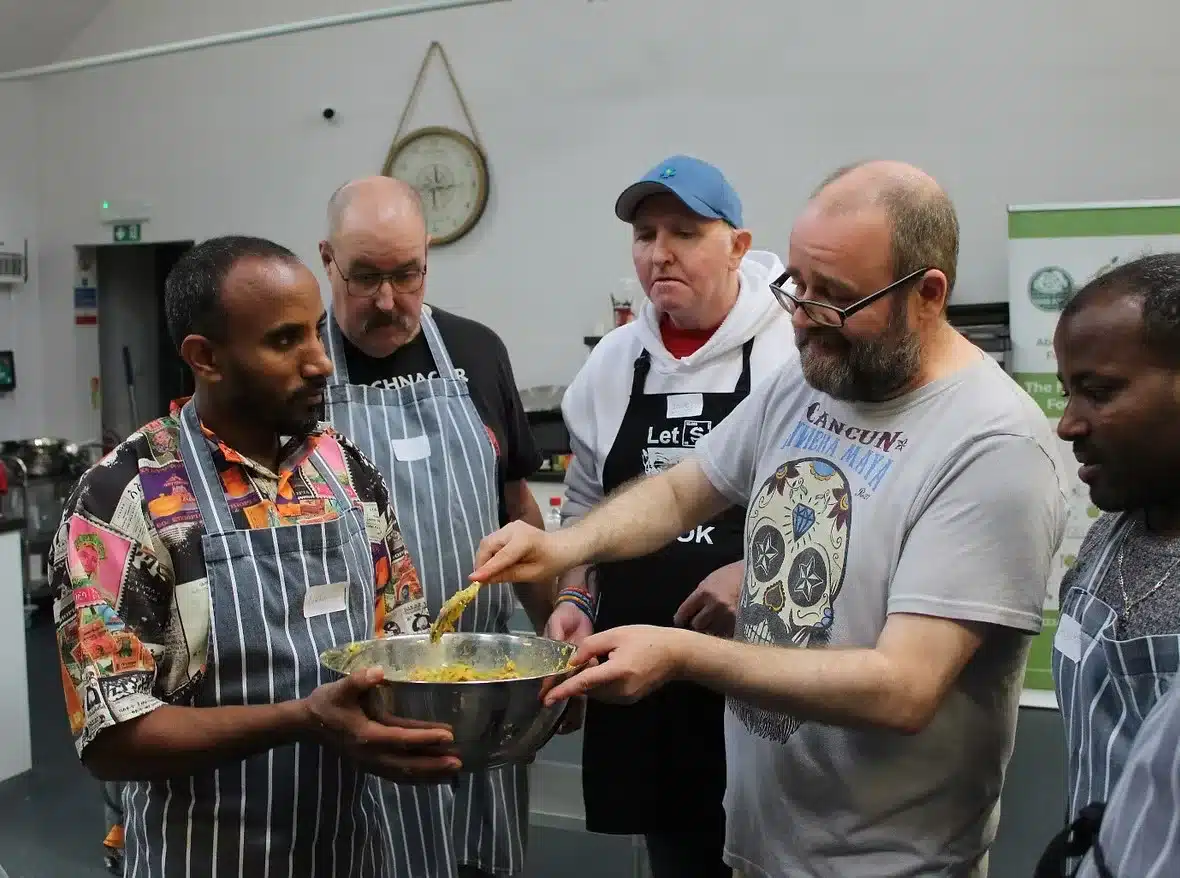
Zero Waste Cooking Workshops with Granite City Food (copyright)
Fortunately, food partnerships are already working in over half of Scotland's local authorities and limited resources haven't stopped them having significant impacts:
- East Ayrshire's food partnership launched a new community benefits initiative requiring all council suppliers to contribute toward tackling food insecurity. This effort supported the launch of a new community larder van and improved the delivery of school lunches helping to reduce food waste, improve uptake and save families £475 a year on average.
- Granite City Good Food supported community food projects in Aberdeen to support people in crisis, help enable change and develop community led solutions through the innovative Food Ladders approach.
- Dumfries and Galloway Sustainable Food Partnership helped boost the local economy through the Galloway Food Hub, connecting over 30 local suppliers directly to customers in their local community.
- East Lothian's Friendly Food Network delivered festive food support to over 9000 people, ensuring dignified access to meals over the holiday period.
“Scotland’s Good Food Nation act is ambitious, exciting, and – with the right support – potentially a groundbreaking improvement to the way food is produced and consumed. However, achieving this requires more than just government policy; without strong local structures to bring the act together, there is a risk that the lofty ambitions will fail to translate into good food for everyone.”

As well as supporting and delivering vital projects in their local community, food partnerships bring organisations and people from across their places together, helping provide a joined-up approach to issues that impact local people. They have intimate knowledge of the assets in their place and through ongoing dialogue, the challenges that people face.
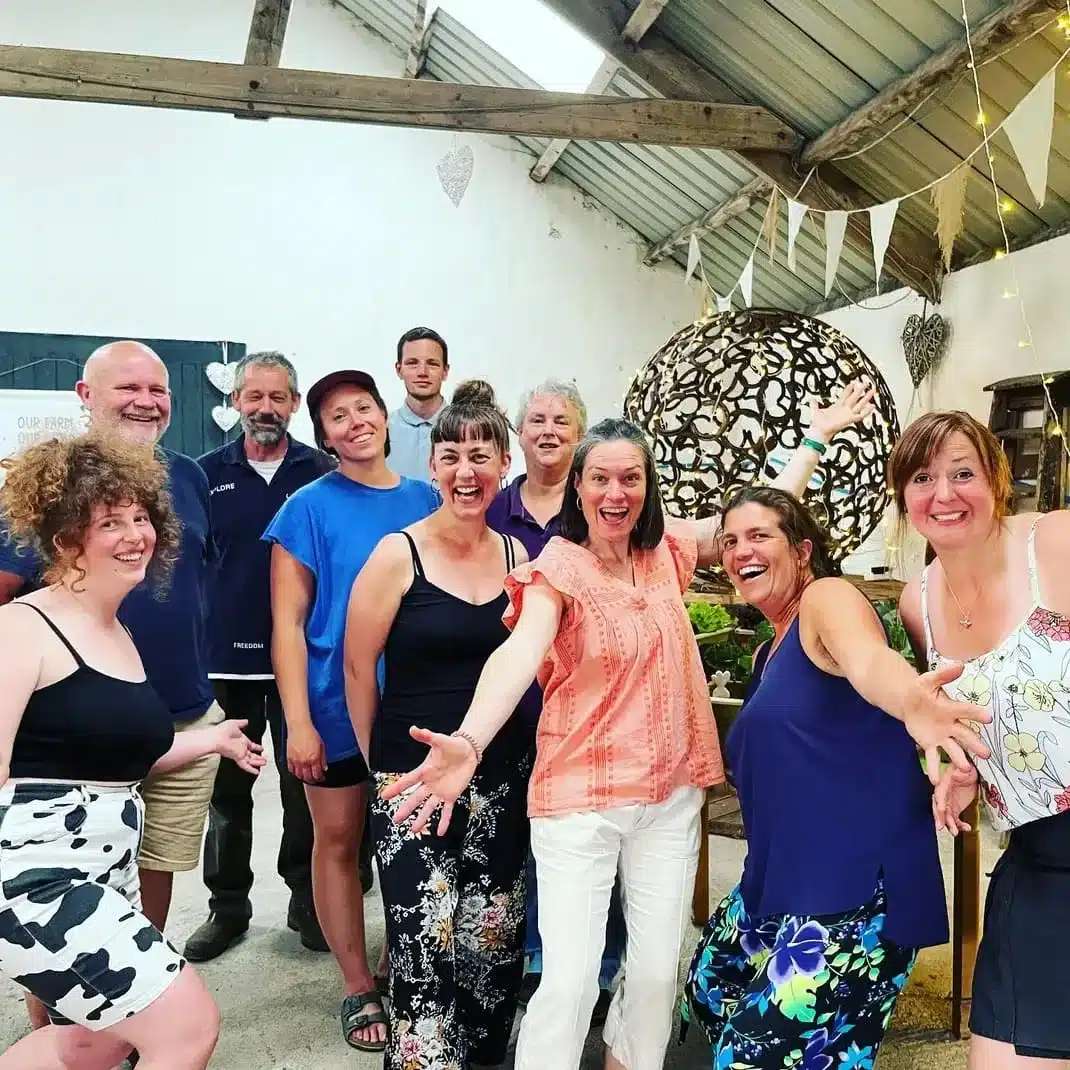
Food producers involved with the Galloway Food Hub. Copyright Galloway Food Hub
The good news is Scotland doesn't need to start from scratch; they can build on the work of existing partnerships and policy. In Wales, following consistent government funding for food partnerships, in just a few years they are already making significant progress establishing new partnerships, building structures and delivering projects designed for people. Now every single local authority in Wales has a food partnership working for local interests and tackling the interconnected issues in their food systems. Scotland can learn from their example and take a similar approach to making food work for everyone.
The Good Food Nation Act provides an exciting framework for change, but this framework alone will not transform Scottish food. If government want to turn their laudable aspirations into on the ground action, partnerships should be central in their journey towards becoming a true Good Food Nation. Therefore, we are asking for the Scottish Government to:
- Fund a food partnership in every local authority area.
- Use food partnerships as a tool to advance public health priorities at a local level.
- Use the Sustainable Food Places Awards as a framework for decision making.
Turning Ambition into Action: Why a Scottish Good Food Nation Needs Food Partnerships
Scotland’s Good Food Nation act is ambitious, exciting, and – with the right support – potentially a groundbreaking improvement to the way food is produced and consumed. However, achieving this requires more than just government policy; without strong local structures to bring the act together, there is a risk that the lofty ambitions will fail to translate into good food for everyone.
It is no secret that Scotland’s food system is not delivering, just 1 in 10 adults eat their five-a-day, a million-face food insecurity and the farming sector contributes 20% of climate emissions. But there is hope, the Scottish Government’s Good Food Nation Act aims to make Scotland a place “where people from every walk of life take pride and pleasure in, and benefit from, the food they produce, buy, cook, serve and eat each day.” The framework has the potential to accelerate positive change in Scotland; on health, the environment, wellbeing and the economy. It also provides a unique opportunity to redesign how decisions on food are made. To achieve this, government needs to work with everyone, from you to local community centres, farmers, butchers, cafes and supermarkets.
Delivering on the promise of the act, therefore, requires a bridge between the complex work of government and the local organisations and businesses at the heart of communities. That’s where food partnerships come in, they bring together people and organisations involved in our food system to coordinate action. Providing the structure, local knowledge and connections for effective engagement, coordination and solutions that work to solve food-related challenges in Scotland.
Zero Waste Cooking Workshops with Granite City Food (copyright)
Fortunately, food partnerships are already working in over half of Scotland’s local authorities and limited resources haven’t stopped them having significant impacts:
- East Ayrshire’s food partnership launched a new community benefits initiative requiring all council suppliers to contribute toward tackling food insecurity. This effort supported the launch of a new community larder van and improved the delivery of school lunches helping to reduce food waste, improve uptake and save families £475 a year on average.
- Granite City Good Food supported community food projects in Aberdeen to support people in crisis, help enable change and develop community led solutions through the innovative Food Ladders approach.
- Dumfries and Galloway Sustainable Food Partnership helped boost the local economy through the Galloway Food Hub, connecting over 30 local suppliers directly to customers in their local community.
- East Lothian’s Friendly Food Network delivered festive food support to over 9000 people, ensuring dignified access to meals over the holiday period.
As well as supporting and delivering vital projects in their local community, food partnerships bring organisations and people from across their places together, helping provide a joined-up approach to issues that impact local people. They have intimate knowledge of the assets in their place and through ongoing dialogue, the challenges that people face.
Food producers involved with the Galloway Food Hub. Copyright Galloway Food Hub
The good news is Scotland doesn’t need to start from scratch; they can build on the work of existing partnerships and policy. In Wales, following consistent government funding for food partnerships, in just a few years they are already making significant progress establishing new partnerships, building structures and delivering projects designed for people. Now every single local authority in Wales has a food partnership working for local interests and tackling the interconnected issues in their food systems. Scotland can learn from their example and take a similar approach to making food work for everyone.
The Good Food Nation Act provides an exciting framework for change, but this framework alone will not transform Scottish food. If government want to turn their laudable aspirations into on the ground action, partnerships should be central in their journey towards becoming a true Good Food Nation. Therefore, we are asking for the Scottish Government to:
- Fund a food partnership in every local authority area.
- Use food partnerships as a tool to advance public health priorities at a local level.
- Use the Sustainable Food Places Awards as a framework for decision making.