Sow Cook Thrive: Using Food & Nature to Enhance Young People’s Wellbeing, Health & Confidence
““I feel more grounded. Before if I went to the park, I have ADHD, and I would struggle to be calm and I would think ‘it’s just trees it doesn’t matter’. But now I feel more present and I’m enjoying being around nature a lot more.”– A participant
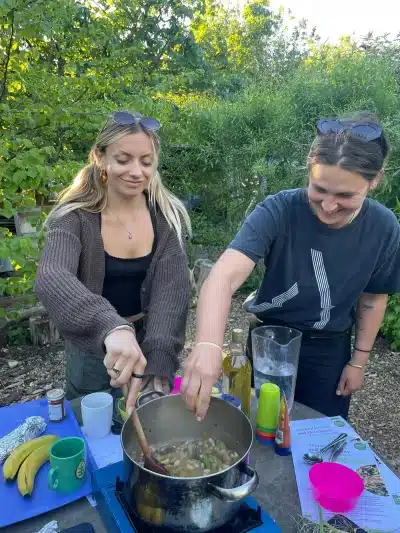
Over six mood boosting weeks, our group facilitator and nutritionist, Freya, has been leading our outdoor wellbeing course for marginalised 18–25 year-olds.
Participants eat, discover and create their way through a variety of wellbeing activities (with helpful nutrition tips thrown in for good measure) designed to lower stress, support meaningful connection and boost confidence. Activities are curated to the needs and wants of attendees including food growing, cooking over fire, yoga, woodwork, natural dying, and weaving. With each session designed to:
- Increase understanding of how food and nature impact our mental health.
- Explore how food and nature can play a positive role in our well-being.
- Develop practical outdoor and cookery skills.
“It’s made me feel more confident in myself and my abilities.”- Participant
A participatory approach
Well-being means something different to everyone. That’s why at each session topics are centered around participant’s needs and motivations. The group leader chooses a variety of options based on conversations from previous weeks. As each session develops participants decide the activities that they would like to take part in, from building a fire, crafting tote bags, foraging for herbs to cooking from scratch. This no pressure approach encourages participation and helps create a judgment free space that allows participants to get involved even when they may be struggling.
Adapting to different learning styles and needs
“I’ve learnt new skills; lighting a fire, sowing seeds. It makes you feel a lot more connected with nature. I’m always relaxed when I get home”- A participant
Each session encourages participants to engage and develop a variety of skills and senses including:
- Identifying herbs, plants & wildlife.
- Trying new seasonal fruits, veggies & herbs.
- Meditation, mindfulness & grounding.
- Increasing nutritional knowledge & cooking skills including seasonality, cooking on a budget, & how to construct delicious balanced meals.
The variety of activities, skills and creative mediums ensures everyone can take something awayfrom each session, whether that’s a new recipe, the ability to identify a plant in their local park or techniques for managing stress. Hands on learning, is an excellent way to develop new skills and is particularly effective for young people who may struggle in conventional learning environments. During a recent session, one participant took it upon themselves to teach others how to produce cyanotype prints, creating beautiful tote bags using natural materials as a small group.
Understanding the Links Between Food, Health and Wellbeing
“My diet’s become more diverse because Freya taught us it’s really important to get a variety of different types of plants in your diet, so I’m not just having one now and I’m eating a lot healthier” Participant
“Diet plays a critical role in shaping…health and well-being” therefore assisting young people to eat a varied, nutrient rich and exciting diet, is crucial to supporting them as they progress through life. Our group makes
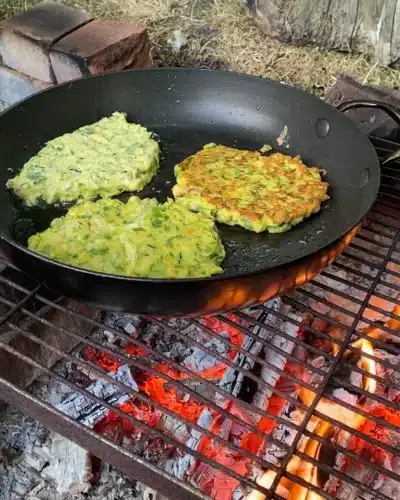
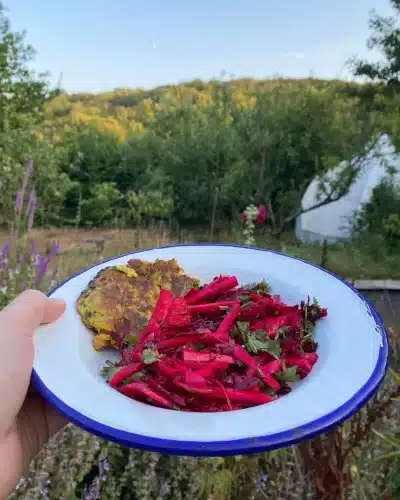
food joyful and delicious. Each session involves cooking a seasonal meal over fire, if weather allows, filled with a variety of vibrant colours and interesting textures. In one July session participants prepared delicious chickpea and courgette fritters served with Greek yoghurt and a vibrant beetroot and apple salad. They chopped fresh produce, mixed the batter and cooked them over an open fire before sharing the meal together. Every plate was left clean and we had a wonderful discussion about how we can find moments for ourselves in nature.
Developing relationships with nature and wellbeing
“ I am making sure I spend more time in nature, because I know how much it helps me now. Sitting in the park for 30 mins before work really improves my mood, I never tried that before, so it’s certainly helped me realise (the benefits).”- Participant
For some people, spending time outdoors is second nature; for others, it can feel unfamiliar or inaccessible. Truly connecting with the natural world and experiencing all the well-researched health outcomes requires knowledge and confidence. That’s why we teach grounding, meditation and how to connect with the world around us. Participants are taught about local plants, wildlife and their health and environmental benefits and encouraged to take 5 minutes to take part in a breathing exercise each session. It’s heartwarming to hear how they’ve learnt to exist alongside nature, value its wellbeing benefits and carve out space for themselves in their busy day-to-day lives.
If you’re interested in our group or know of someone 18-25 who could benefit? Email our course leader Freya at [email protected] or complete this form.
Sow Cook Thrive: Using Food & Nature to Enhance Young People’s Wellbeing, Health & Confidence
““I feel more grounded. Before if I went to the park, I have ADHD, and I would struggle to be calm and I would think ‘it’s just trees it doesn’t matter’. But now I feel more present and I’m enjoying being around nature a lot more.”– A participant
Over six mood boosting weeks, our group facilitator and nutritionist, Freya, has been leading our outdoor wellbeing course for marginalised 18–25 year-olds.
Participants eat, discover and create their way through a variety of wellbeing activities (with helpful nutrition tips thrown in for good measure) designed to lower stress, support meaningful connection and boost confidence. Activities are curated to the needs and wants of attendees including food growing, cooking over fire, yoga, woodwork, natural dying, and weaving. With each session designed to:
- Increase understanding of how food and nature impact our mental health.
- Explore how food and nature can play a positive role in our well-being.
- Develop practical outdoor and cookery skills.
“It’s made me feel more confident in myself and my abilities.”- Participant
A participatory approach
Well-being means something different to everyone. That’s why at each session topics are centered around participant’s needs and motivations. The group leader chooses a variety of options based on conversations from previous weeks. As each session develops participants decide the activities that they would like to take part in, from building a fire, crafting tote bags, foraging for herbs to cooking from scratch. This no pressure approach encourages participation and helps create a judgment free space that allows participants to get involved even when they may be struggling.
Adapting to different learning styles and needs
“I’ve learnt new skills; lighting a fire, sowing seeds. It makes you feel a lot more connected with nature. I’m always relaxed when I get home”- A participant
Each session encourages participants to engage and develop a variety of skills and senses including:
- Identifying herbs, plants & wildlife.
- Trying new seasonal fruits, veggies & herbs.
- Meditation, mindfulness & grounding.
- Increasing nutritional knowledge & cooking skills including seasonality, cooking on a budget, & how to construct delicious balanced meals.
The variety of activities, skills and creative mediums ensures everyone can take something awayfrom each session, whether that’s a new recipe, the ability to identify a plant in their local park or techniques for managing stress. Hands on learning, is an excellent way to develop new skills and is particularly effective for young people who may struggle in conventional learning environments. During a recent session, one participant took it upon themselves to teach others how to produce cyanotype prints, creating beautiful tote bags using natural materials as a small group.
Understanding the Links Between Food, Health and Wellbeing
“My diet’s become more diverse because Freya taught us it’s really important to get a variety of different types of plants in your diet, so I’m not just having one now and I’m eating a lot healthier” Participant
“Diet plays a critical role in shaping…health and well-being” therefore assisting young people to eat a varied, nutrient rich and exciting diet, is crucial to supporting them as they progress through life. Our group makes
food joyful and delicious. Each session involves cooking a seasonal meal over fire, if weather allows, filled with a variety of vibrant colours and interesting textures. In one July session participants prepared delicious chickpea and courgette fritters served with Greek yoghurt and a vibrant beetroot and apple salad. They chopped fresh produce, mixed the batter and cooked them over an open fire before sharing the meal together. Every plate was left clean and we had a wonderful discussion about how we can find moments for ourselves in nature.
Developing relationships with nature and wellbeing
“I am making sure I spend more time in nature, because I know how much it helps me now. Sitting in the park for 30 mins before work really improves my mood, I never tried that before, so it’s certainly helped me realise (the benefits).”- Participant
For some people, spending time outdoors is second nature; for others, it can feel unfamiliar or inaccessible. Truly connecting with the natural world and experiencing all the well-researched health outcomes requires knowledge and confidence. That’s why we teach grounding, meditation and how to connect with the world around us. Participants are taught about local plants, wildlife and their health and environmental benefits and encouraged to take 5 minutes to take part in a breathing exercise each session. It’s heartwarming to hear how they’ve learnt to exist alongside nature, value its wellbeing benefits and carve out space for themselves in their busy day-to-day lives.
If you’re interested in our group or know of someone 18-25 who could benefit? Email our course leader Freya at [email protected] or complete this form.